





By Andrew Vickers – On 1
If you walk into almost any bar, restaurant, gym, café, or club, chances are you will hear music coming from someone’s personal Spotify account or see YouTube playlists running on the TV screens. It feels harmless. The music is popular, the setup is simple, and the price looks cheap. That is exactly why so many venues do it.
Can you legally use Spotify or YouTube in a bar?
Short answer: No, you cannot. Personal Spotify and YouTube accounts are licensed for private use only, not for any commercial environment. Many venues learn this the hard way, with an increasing number being hit with significant fines and backdated fees.
It is a question many operators still Google because the rules are not obvious. What feels like a simple shortcut is actually a licensing problem that can expose your venue to costs and risks most owners never see coming.
This guide breaks down what operators get wrong, why these platforms put your business at risk, and why a proper commercial system like Orange Door ends up being the smarter choice in the long run.
The single biggest misconception in hospitality is the idea that a personal account can legally cover a public venue. It cannot.
Spotify’s own terms are clear. Personal and family accounts are strictly for private use. Any time you play music in a bar, restaurant, gym, or commercial environment, it counts as a public performance. That requires specific commercial licensing.
YouTube is the same. YouTube’s music rights only cover personal viewing. Playing YouTube videos publicly, even from music channels, is completely outside their license.
This is why you often hear operators say, “But everyone does it.” That does not make it legal. It only means they have not been audited yet.
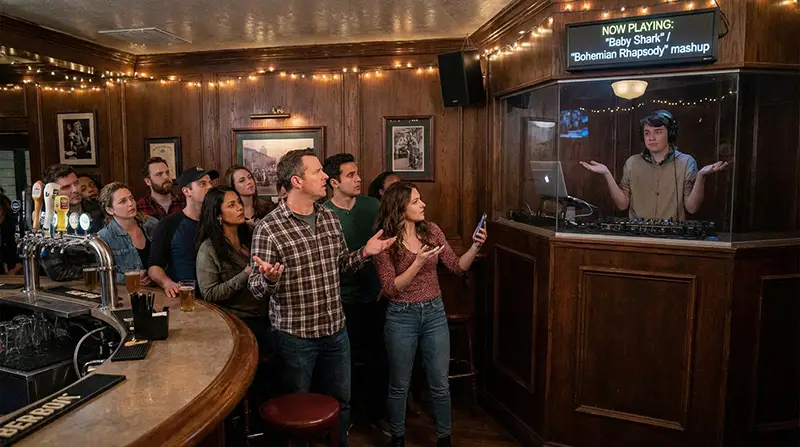
This is where Orange Door comes in. Instead of using personal streaming apps that were never designed for public spaces, Orange Door gives venues a system built specifically for bars, restaurants, gyms, casinos, and hospitality.
Orange Door improves atmosphere and dwell time
The music video library is curated for commercial environments, so you avoid sudden mood swings, explicit surprises, and random algorithm picks.
Orange Door removes YouTube clutter
Music videos are clean, high quality, correctly formatted, and free from advertising or thumbnails.
Orange Door works even when your internet drops
Consumer streaming fails the moment your connection cuts. Orange Door stores content locally, which means your screens do not freeze, buffer, or drop out.
Orange Door gives you full control
Dayparting, energy changes, weekend mixes, quiet times, and promotional content can all be scheduled in minutes.
Orange Door unifies screens and entertainment
Instead of running music in one system, ads in another, and staff devices for everything else, Orange Door centralises it. One system for music videos, digital signage, advertising, branded promos, and ambient content.
Send a quick message to our team with any question or ideas your have and we will get back to you as soon as possible!