



By Andrew Vickers – On 30
Most bars do not have a technology problem.
They have a decision load problem.
Walk into almost any venue in 2026 and you will see the same setup of bar TV screens, background music, and multiple systems running in parallel. Everything is installed. Everything technically works.
Very little of it is being used with intent.
This is not because operators do not care. It is because bars are decision-saturated environments, and most bar technology quietly assumes someone has time to manage it.
Almost every bar installs new technology with good intentions.
The thinking is familiar.
We’ll dial this in once things calm down.
We’ll use the scheduler properly when we get time.
We’ll experiment with features after the busy period.
That moment rarely comes.
Bars stay reactive. Staffing issues, suppliers, compliance, and service take priority. So systems get switched on and left running in a permanent temporary state.
Music plays, but stays generic.
Screens show something safe.
Schedulers exist, but never get adopted.
Extra features rely on someone remembering to use them.
Nothing is broken. Nothing is optimized.
Most operators worry about choosing the wrong system.
The bigger risk is different.
The most expensive outcome is paying for a bar music system or digital signage platform that depends on constant attention in an environment that has none to spare.
When systems require daily decisions, they slowly fade into the background. Not because they are bad tools, but because they compete with more urgent operational problems.
The cost shows up quietly through:
• Shorter dwell time
• Fewer repeat visits
• Flat weeknights
• Screens and music that stop influencing guest behavior
This is especially visible on nights without live sport, when music and screens for bars matter most.
Another reason venues stall is fear.
Fear of changing the vibe.
Fear of annoying regulars.
Fear of staff pushback.
Fear of touching something that is not technically broken.
So many bars default to safe, middle-ground setups. Music that offends no one. Screen content that blends into the room.
It feels responsible. In practice, it makes venues forgettable.
Guests do not leave because something is wrong. They leave because nothing is pulling them to stay.
In 2026, bars have access to more tools than ever. Music platforms, hospitality digital signage, bar games, advertising modules, schedulers.
Ironically, this often increases indecision.
When technology assumes someone will constantly log in, plan ahead, tweak settings, and monitor content, it clashes with how bars actually operate. Decision fatigue sets in. Defaults take over.
This is where most bar technology solutions fall short. Not in capability, but in how much attention they demand.
Why systems that reduce decisions actually work
The venues getting real value from their screens and music are not working harder.
They rely on systems designed to reduce decisions once the direction is set.
These systems:
• Run consistently by time of day
• Keep music and screen content aligned
• Support staff instead of distracting them
• Shape the room without constant input
Bars do not need more features. They need fewer decisions during service.
In 2026, bars do not win by stacking more technology on top of busy teams.
They win by choosing systems that remove friction, reduce decisions, and support the room automatically once intent is set.
Underused tech disappears into the background.
Well-designed systems quietly create better nights.
If this feels familiar, it usually means your setup is doing too much work for your team.
Most venues are not short on tools. They are buried under disconnected systems that all expect attention in the middle of service.
The problem is not having technology.
The problem is having too many separate platforms trying to solve one experience.
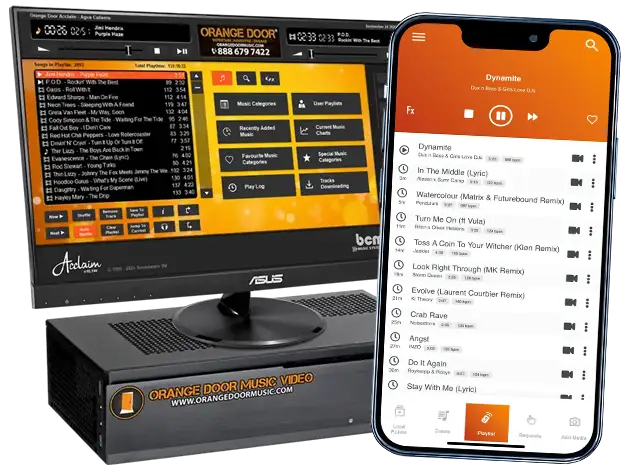
Orange Door is designed to replace that fragmentation.
👉 See how Orange Door works in bars:
https://www.orangedoormusic.com/jimmy-jacks/
Or book a quick walkthrough and see if it fits your venue.
Send a quick message to our team with any question or ideas your have and we will get back to you as soon as possible!